Logan Butler · 5 September 2026
Patterns of Insulation Degradation in Electric Kettle Cords Under Repeated Thermal Cycling Conditions
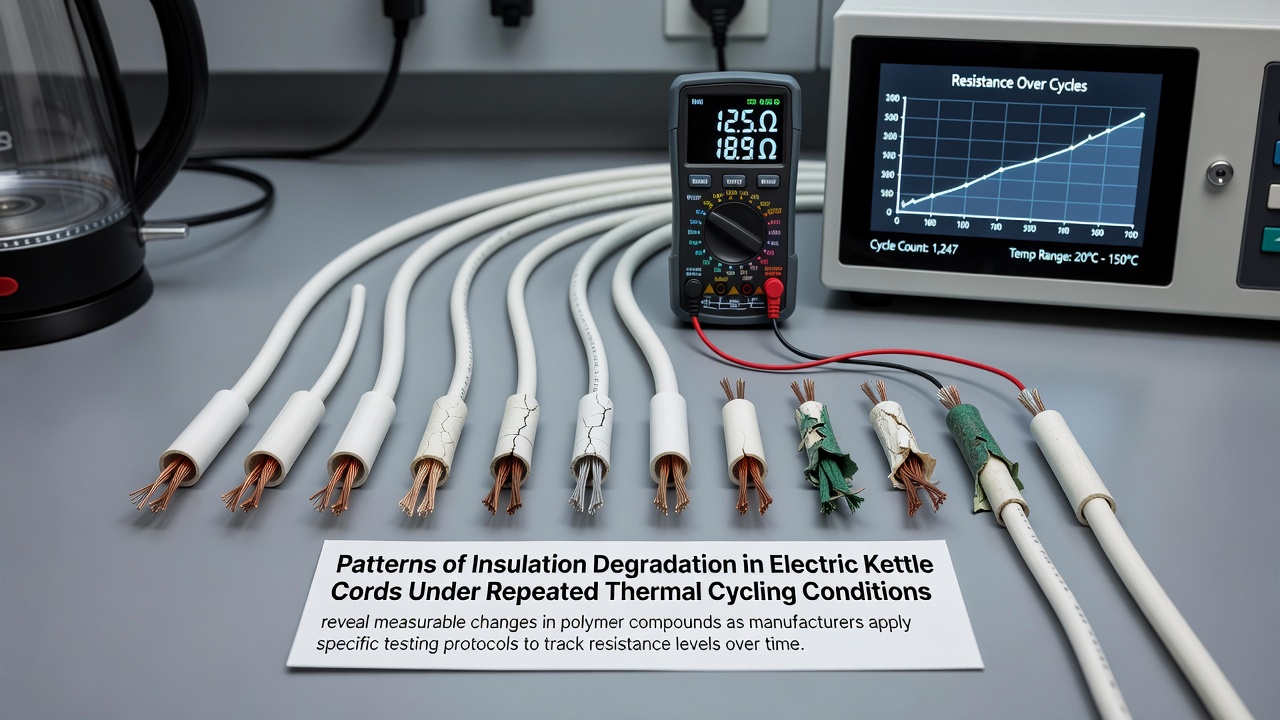
Electric kettle cords face constant thermal stress during daily use, and researchers track how insulation materials respond to repeated heating and cooling cycles that push temperatures from room levels up to boiling points and back again. Manufacturers apply standardized protocols to measure electrical resistance shifts in the polymer compounds, which helps identify when materials begin to lose their protective qualities. Data from multiple testing facilities shows that these cycles create microscopic changes in the molecular structure of common insulation types like PVC and cross-linked polyethylene, leading to gradual increases in conductivity paths that were not present at the start of the product life cycle.
Thermal Cycling Mechanisms in Polymer Insulation
Each time an electric kettle heats water the cord experiences a rapid temperature rise followed by cooling once the device switches off, and this pattern repeats hundreds of times over months of household operation. The expansion and contraction stresses the polymer chains, which creates voids and micro-cracks that allow moisture or contaminants to enter the insulation layers. Studies conducted under controlled laboratory conditions reveal that resistance measurements drop measurably after 500 cycles in many samples, with further declines appearing between 1,000 and 2,000 cycles depending on the specific compound formulation and the presence of stabilizers.
Manufacturers follow testing sequences that simulate these real-world conditions using programmable ovens and load banks, which cycle the cords through precise temperature profiles while monitoring insulation resistance at regular intervals. The protocols often reference methods outlined by international standards organizations, and one such framework comes from the International Electrotechnical Commission guidelines on appliance cord durability. Observers note that cords tested this way provide consistent data points that allow comparison across different production batches and material suppliers.
Measurable Changes in Resistance and Compound Properties
Resistance tracking forms the core of these evaluation procedures because even small reductions in insulation resistance can indicate the start of degradation pathways. Test results indicate that initial resistance values in new cords often exceed several hundred megaohms, yet after repeated thermal exposure the figures fall into the low megaohm or even kiloohm range in affected sections. Polymer analysis through techniques such as differential scanning calorimetry shows shifts in glass transition temperatures and crystallinity levels, which correlate directly with the electrical readings collected during cycling.
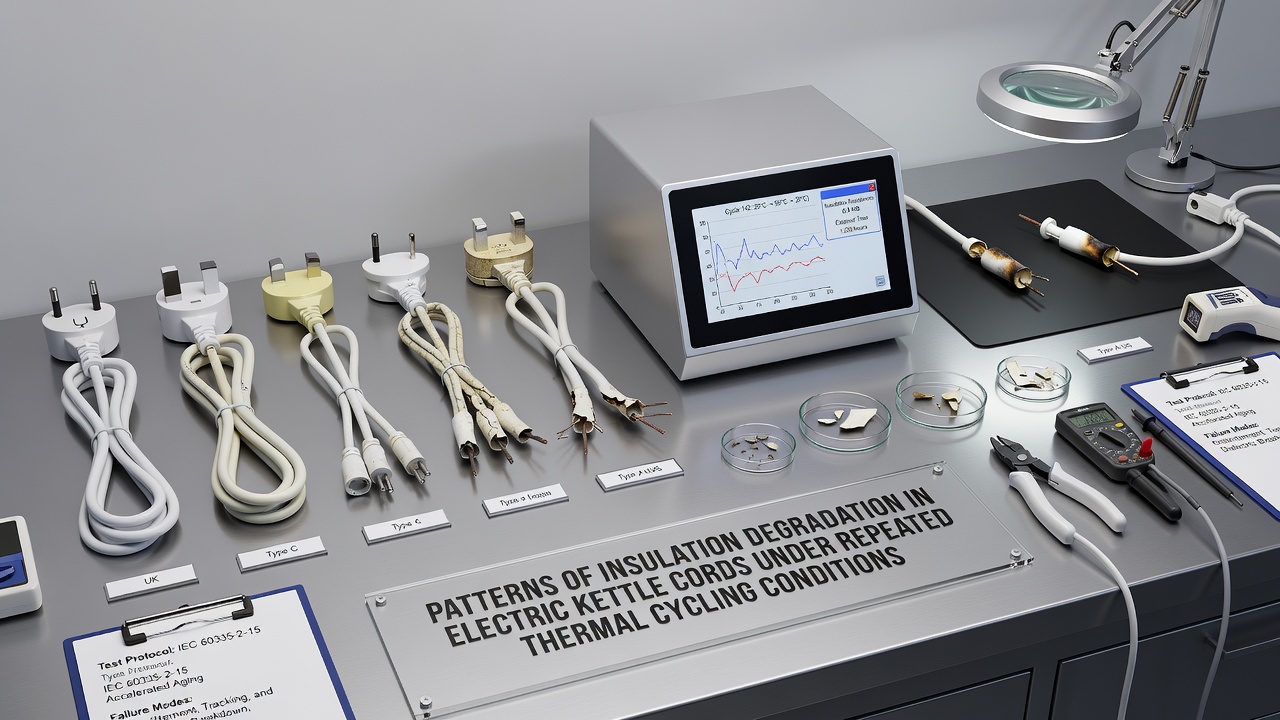
Additional measurements include elongation at break and tensile strength, which decline alongside the resistance values and point to embrittlement of the outer sheath. In one documented series of experiments performed at a materials research facility, cords containing specific antioxidant packages maintained higher resistance levels longer than standard formulations, although all samples eventually showed some degree of change after extended cycling. These findings help suppliers refine compound recipes before full-scale production begins.
Industry Testing Protocols and Data Collection Practices
Quality control teams integrate thermal cycling into broader reliability programs that also examine flexing, abrasion, and voltage stress, creating a comprehensive profile of cord performance over simulated years of service. Automated data logging systems record resistance at each temperature plateau, which generates curves that reveal acceleration points where degradation speeds up. September 2026 marks the scheduled rollout of updated harmonized test parameters across several regional certification bodies, and these changes aim to align cycle counts and temperature ramp rates more closely with actual consumer usage patterns reported in field surveys.
Engineers compare results against pass-fail thresholds established by regulatory frameworks such as those maintained by Standards Australia, which emphasize minimum resistance retention after a defined number of cycles. The data sets collected from these procedures feed into material databases that manufacturers consult when selecting compounds for new kettle models. Patterns emerge across multiple suppliers showing that certain plasticizers migrate faster under thermal stress, which contributes to surface tackiness and further resistance reduction.
Conclusion
Continued monitoring of insulation resistance during thermal cycling provides manufacturers with clear indicators of polymer stability and helps maintain consistent safety margins in electric kettle cords. The measurable changes documented through these protocols guide ongoing refinements in material selection and processing methods that support longer service life for the finished products.