Dana Meier · 3 October 2026
Exploring Plasticizer Migration Effects on Flexibility Retention in Heat-Resistant Appliance Wiring Systems
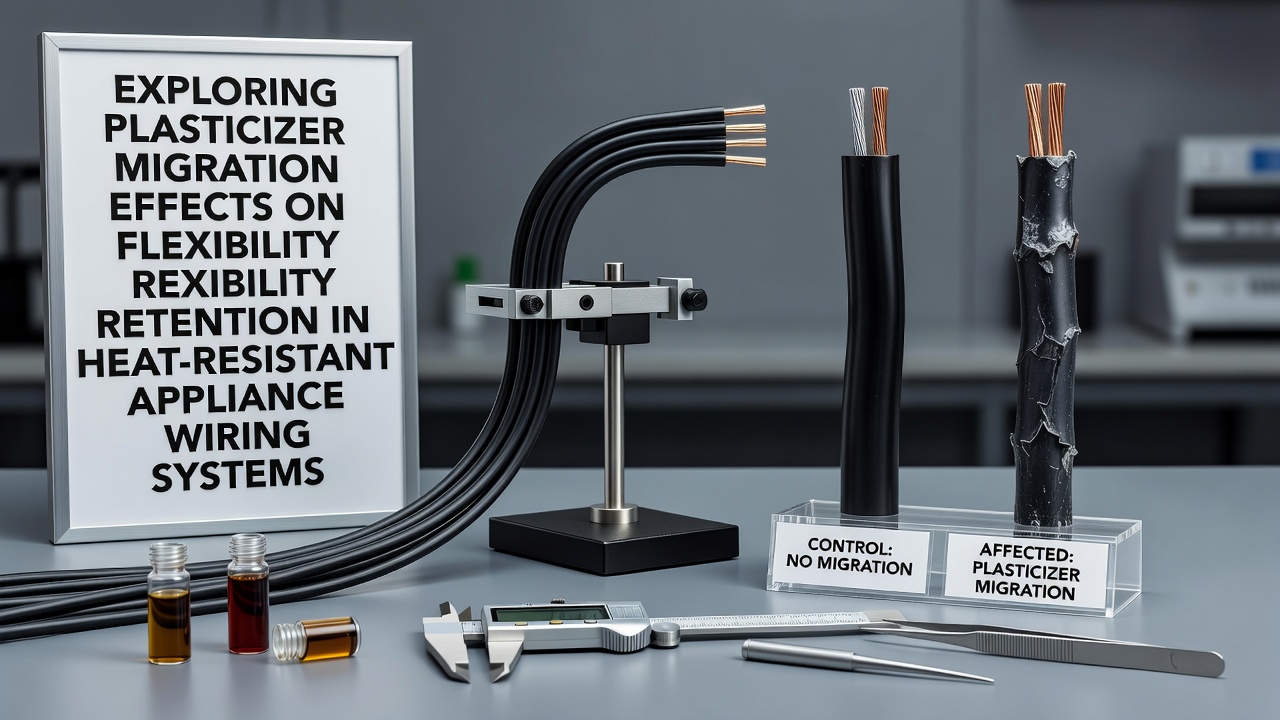
Plasticizer migration occurs when additives such as phthalates or adipates move from the polymer matrix in PVC-based insulation toward the surface or into adjacent materials, and this process accelerates in appliance wiring exposed to sustained high temperatures. Heat-resistant systems often incorporate specialized formulations designed to maintain dielectric strength and mechanical properties, yet migration still reduces the concentration of these additives within the insulation over extended service periods. Data from accelerated aging tests show that flexibility retention drops measurably after repeated thermal exposure cycles between 105°C and 150°C, which are common in motors, heating elements, and control circuits.
Researchers have documented that the rate of migration depends on several interacting variables including plasticizer molecular weight, compatibility with the base resin, temperature gradients, and the presence of extraction media such as oils or cleaning solvents. Lower molecular weight plasticizers diffuse more rapidly, producing earlier onset of surface tackiness followed by embrittlement, whereas higher molecular weight alternatives extend the period before significant stiffening occurs. Studies conducted under controlled oven conditions reveal that insulation elongation at break can decline by 30 to 60 percent within 2000 hours at 125°C when standard di-octyl phthalate is used without additional stabilizers.
Mechanisms Driving Migration in Heat-Resistant Designs
Heat-resistant appliance wiring frequently employs cross-linked polyethylene or specially compounded PVC that incorporates heat stabilizers alongside plasticizers, yet these stabilizers do not fully prevent diffusion when temperatures remain elevated for prolonged durations. Plasticizer molecules gain kinetic energy as temperature rises, increasing their ability to overcome intermolecular forces within the polymer network and migrate along concentration gradients toward interfaces. Observers note that once plasticizer concentration falls below a critical threshold, the glass transition temperature of the compound rises, resulting in reduced chain mobility and measurable loss of flexibility.
Additional factors include mechanical stress from flexing during installation or operation, which can create micro-voids that facilitate faster transport of additives. In multi-conductor cables, plasticizers may also migrate into neighboring jacket materials or fillers, further depleting the insulation layer. Laboratory measurements using Fourier-transform infrared spectroscopy confirm decreasing plasticizer peaks at the core of aged samples while surface concentrations initially increase before volatilization or extraction removes them entirely.
Impact on Flexibility Retention Over Service Life
Flexibility retention is quantified through repeated bend tests, mandrel wrap evaluations, and dynamic mechanical analysis that tracks storage modulus changes with aging. Results indicate that wiring rated for continuous operation at 90°C or higher experiences accelerated stiffening when plasticizer loss exceeds 15 percent of the original loading. This stiffening manifests as increased cracking risk during thermal cycling, especially when appliances undergo frequent on-off cycles that produce expansion and contraction stresses.
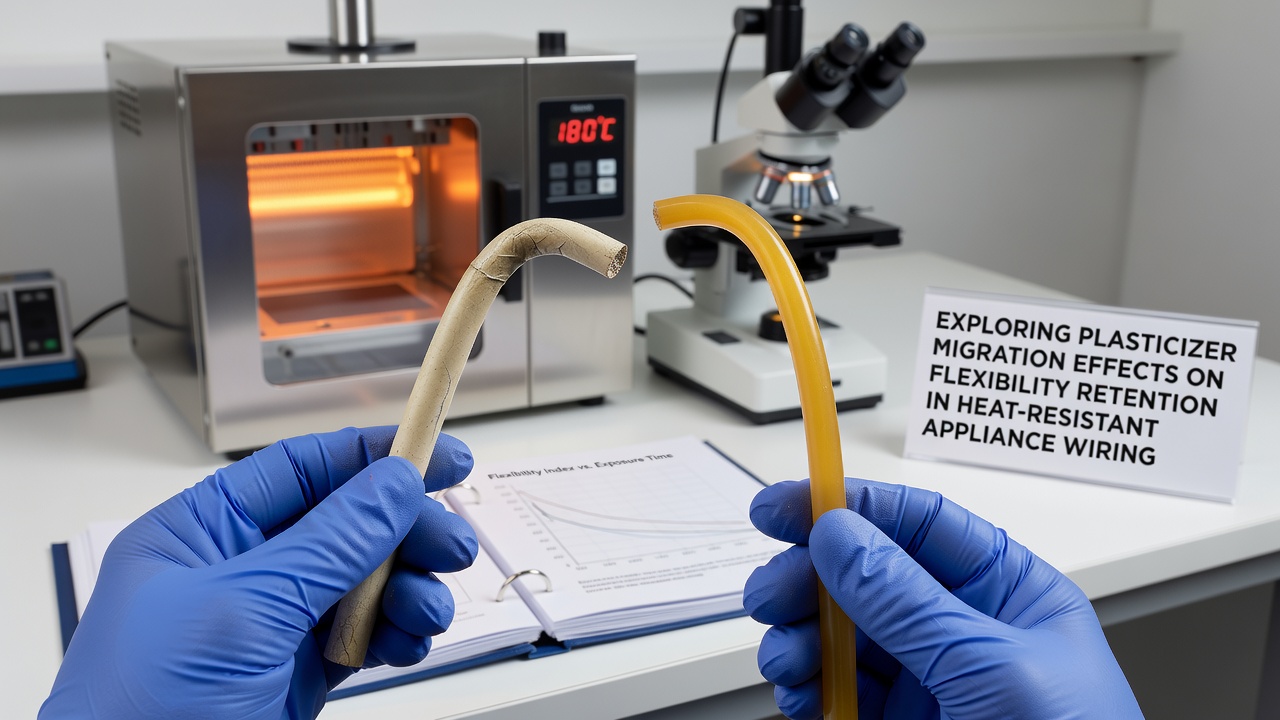
Manufacturers address these effects by selecting trimellitate or polymeric plasticizers that exhibit lower volatility and migration rates, and by adding migration barriers such as surface coatings or co-extruded layers. Industry reports compiled by the European Chemicals Agency detail how regulatory restrictions on certain low-molecular-weight phthalates have prompted wider adoption of alternative plasticizers in appliance wire compounds. Parallel evaluations performed by Canadian standards organizations have tracked similar performance improvements when higher molecular weight additives replace traditional formulations.
Testing Protocols and Predictive Modeling
Standardized protocols such as those outlined in IEC 60216 and UL 1581 subject specimens to elevated temperatures for defined intervals then measure tensile and elongation properties to project service life. Predictive models incorporate Arrhenius relationships to extrapolate short-term test data into multi-year estimates, although these projections require validation against field-aged samples collected from appliances retired after five to ten years of use. Recent analyses of wiring extracted from commercial kitchen equipment and industrial ovens in October 2026 showed that actual flexibility retention aligned closely with laboratory predictions when operating temperatures stayed within rated limits.
Yet deviations appear when localized hot spots develop near heating elements or when vibration introduces additional mechanical fatigue. Those conducting long-term monitoring programs emphasize the value of combining chemical analysis with physical testing to detect early migration before visible cracking occurs. Such combined approaches allow appliance designers to adjust insulation thickness, conductor spacing, or ventilation paths to moderate internal temperatures and thereby slow migration kinetics.
Conclusion
Plasticizer migration remains a central consideration in maintaining flexibility retention for heat-resistant appliance wiring systems, with documented effects on elongation, cracking resistance, and overall service life. Ongoing material development, refined testing methodologies, and regulatory guidance continue to shape formulation choices that balance performance, safety, and compliance requirements across global markets.